How to Sell Water Filtration Systems
Water filtration sells on evidence: an in-home test the homeowner watches, read against the utility's own water-quality report, matched to a system that treats what was actually found. The category's pushy reputation came from theatrical demos and one-size-fits-all softener pitches; the durable process is test, educate, tier — hardness and chlorine to whole-home carbon and softening, with point-of-use reverse osmosis where drinking-water concerns are real.
The honest in-home test
Run hardness, chlorine, TDS, iron, and pH at the kitchen tap while narrating what each measures. Skip the precipitation-theater tricks that make tap water look toxic — homeowners research afterward, and theatrics convert into refund requests. 'Your hardness reading explains the scale on this kettle' is persuasive because it's checkable.
Map findings to systems, not products to everyone
Credibility comes from differential recommendations:
- High hardness → softener or conditioner; show appliance-life and energy math.
- Chlorine taste/odor → whole-home carbon; mention shower-air quality for sensitive households.
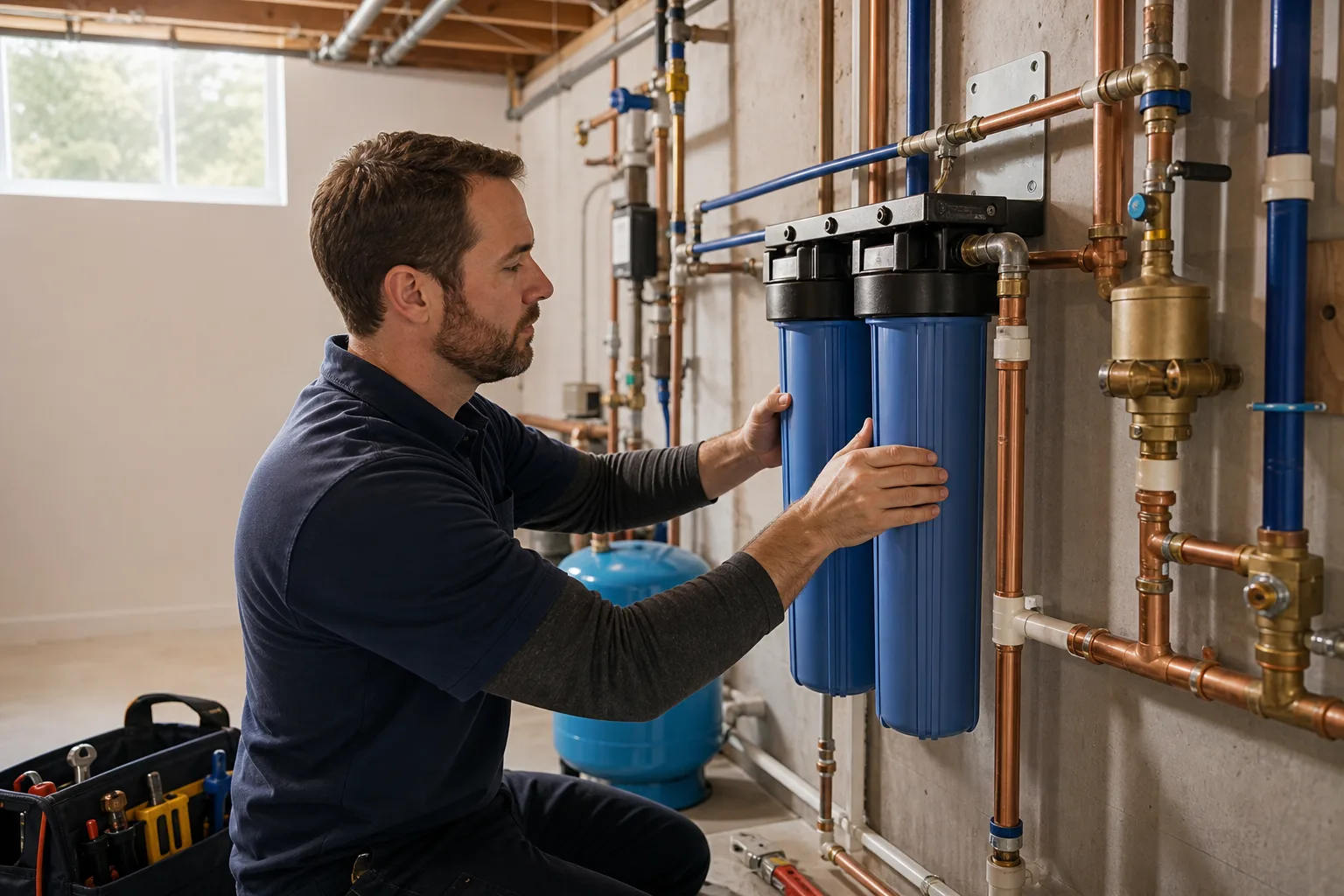
- Drinking-water worries (lead lines, PFAS news, taste) → under-sink RO with its own faucet.
- Well water → expanded testing first (bacteria, nitrates, arsenic) and treatment designed to lab results; EPA notes that private well owners are responsible for their own water quality.
Tiers and the monthly frame
Good: the single system fixing the loudest problem. Better: carbon + softening combo. Best: whole-home combo plus RO and a leak-shutoff valve. A financed 'better' tier can be set against a bottled-water habit — make that comparison explicitly: set the bottled-water spend the homeowner told you about beside the financed payment in the proposal, and point out that every tap is covered.
Service plans make it a relationship
Filter changes and salt delivery are the natural membership: predictable revenue for you, zero-thought maintenance for them, and a standing twice-a-year visit that feeds the cross-sell map (water heater age, leak detection, plumbing condition). Disclose consumable costs in the original proposal — surprise maintenance is the category's main churn driver.
Frequently asked questions
Is municipal water 'unsafe' a good selling angle?
No — it's usually false and always fragile. Public water systems must meet EPA's national drinking water regulations and publish a Consumer Confidence Report; filtration sells on hardness damage, taste, chlorine, aging service lines, and personal preference. Align with the utility report and sell improvement, not fear.
What close rate do test-first water teams see?
When the homeowner watches their own numbers appear, the evidence does much of the selling on hardness-driven leads. Compare same-visit closes on tested and untested visits in your own pipeline.
Softener or 'salt-free conditioner' — what should reps say?
Tell the truth: only ion-exchange softening removes hardness; template-assisted crystallization conditions scale behavior without removing minerals. Offer both with the trade-offs (salt and discharge rules vs. partial effect), matched to local regulations and the homeowner's priorities.
Sources
Put this playbook to work on your next visit.
PORTREX gives residential service teams cross-sell prompts, tiered proposals, financing options, e-signature, and a $0 customer portal — in one flow your reps can run at the kitchen table.
Explore proposal templatessizing & cost toolscomparisonspricing